California’s push to decarbonize transportation has reshaped how transit agencies think about vehicles, fueling, and long-term planning. Battery-electric buses and charging infrastructure remain central to that effort, but for many agencies, experience has made one thing clear: no single technology can meet every operational need.
Long routes, high vehicle utilization, limited depot space, and the need for fast refueling have pushed agencies to explore complementary solutions, particularly for applications that are difficult to electrify with batteries alone. Increasingly, clean fuels are emerging as part of a more flexible and resilient approach to transit decarbonization.
One company helping advance that next phase is K2 Pure Solutions.
Turning Industrial Byproducts Into Transit-Ready Fuel
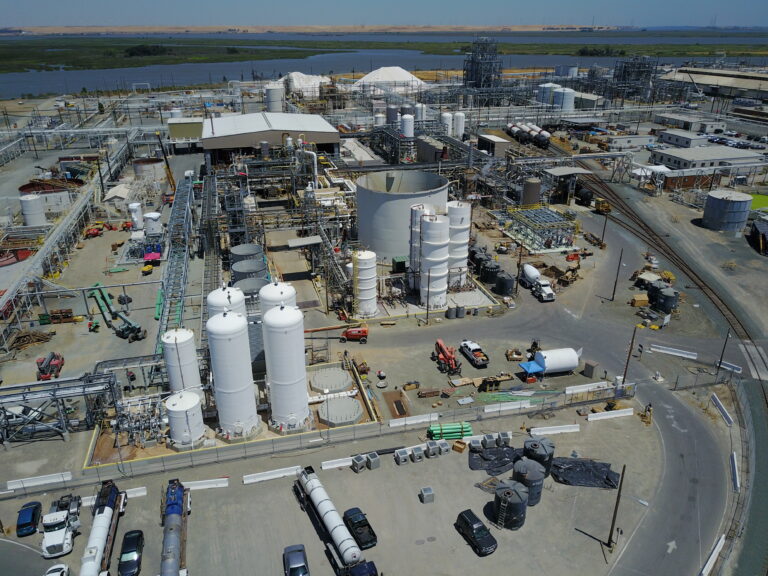
In late 2025, K2 Pure Solutions broke ground on a commercial low-carbon hydrogen facility in Pittsburg, California. The project expands the company’s existing industrial operations into clean fuel production and is expected to begin commissioning in late spring 2026.
Unlike many hydrogen projects that begin as standalone pilots, K2’s facility is built on existing infrastructure. Hydrogen is already produced as a byproduct of K2’s long-standing chlor-alkali manufacturing process. The new facility captures that hydrogen, purifies it, compresses it to high pressure, and makes it available as a low-carbon fuel for transportation and industrial users.
“For transit agencies, reliability and scalability matter as much as emissions reductions,” said David Cynamon, CEO of K2 Pure Solutions. “Our focus is on taking a fuel that’s already being produced every day and delivering it in a way that transit operators can actually use at commercial scale, with dependable supply.”
For agencies, this model is significant. It offers access to locally produced hydrogen without the long development timelines or infrastructure uncertainty that often accompany new energy projects.
From Pilot Programs to Daily Service
A recurring challenge in clean transit has been moving beyond demonstration projects to systems that operate reliably day in and day out. K2’s Pittsburg facility is designed with that transition in mind. Its production capacity is intended to support ongoing operations, not just limited trials.
K2 has also partnered with PACC Services to manage customer engagement, logistics, and distribution, acknowledging that fuel supply and delivery are just as critical to agencies as vehicle technology.
“For transit operators, fuel availability, predictable pricing, and dependable logistics aren’t optional,” Cynamon said. “They’re essential to fleet planning and service reliability.”
What “Carbon Intensity” Means and Why It Matters
Carbon intensity measures the total greenhouse gas emissions associated with a fuel over its full lifecycle, from production through use. K2 uses the U.S. Department of Energy’s GREET model (Greenhouse gases, Regulated Emissions, and Energy use in Technologies), the federal standard for lifecycle analysis.
Under GREET, the hydrogen produced at K2’s Pittsburg facility has roughly 5% of the lifecycle emissions of an equivalent gallon of gasoline, about 95% lower. The comparison to gasoline is intentional: K2’s hydrogen is designed to directly displace fossil fuels in buses, trucks, cars, forklifts, port equipment, and generators, all while delivering near-zero tailpipe emissions. The combination of an efficient industrial process and short delivery distances drives that low carbon intensity.
A Model Aligned With Transit Realities
K2’s approach reflects several realities transit agencies face:
- Some routes and vehicles remain hard to electrify.
- Infrastructure constraints vary widely by depot and region.
- Local, resilient supply chains reduce operational risk.
By integrating clean fuel production into an existing industrial site, the Pittsburg project demonstrates how transit-ready solutions can scale faster while minimizing disruption.
Looking Ahead
California’s transit future is unlikely to be defined by a single technology. Instead, agencies are building portfolios that combine battery-electric vehicles, clean fuels, and operational strategies tailored to their systems.
Low-carbon hydrogen will not replace batteries, but for many agencies, it will play a critical supporting role. Projects like K2 Pure Solutions’ Pittsburg facility point toward a more practical phase of the energy transition: one focused less on experimentation and more on systems that work in real-world service.
For transit agencies balancing ambitious climate mandates with daily service demands, that balance may define the road ahead.