
AI-powered tools are transforming how travelers find unique destinations that guidebooks often miss. This article gathers insights from experts who use machine learning to surface lesser-known locations—from quiet coastal towns to hidden natural retreats—based on specific criteria like proximity, reviews, and niche interests. Learn practical techniques to prompt AI systems for personalized recommendations that go far beyond mainstream travel sites.
- Chart Tranquil Anchorages with Tidal Constraints
- Combine History and Tides for Cabrillo
- Rank by Proximity to Uncover Savannah Nooks
- Surface Aquia Pines near Microbreweries
- Pinpoint Sabal Palm through Specific Prompts
- Map Low-Noise Redwood Pockets around Occidental
- Let ChatGPT Reveal Passu and Beyond
- Detect Patterns across Obscure Forums
- Match Ericeira to Team Profiles
- Target Outliers to Locate Quiet Setagaya
- Use Perplexity to Unearth Serene Cozumel
- Analyze Reviews to Expose Overlooked Towns
Chart Tranquil Anchorages with Tidal Constraints
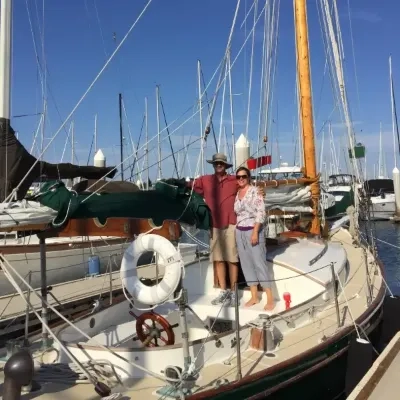
Running Blue Life Charters in Charleston means I’m constantly hunting for “wow” anchorages and quiet wildlife pockets, but I still vet everything with local charts and my own eyes. AI has helped me narrow the search fast, then I confirm it on the water like any other route plan.
A concrete example: I used ChatGPT to build a shortlist of “low-wake, low-traffic” spots within a 60-90 minute window of Charleston that fit a 4-hour private sail (depth at mid/low tide, protection from a SW sea breeze, and minimal ferry traffic). It surfaced a couple small creeks off the ICW and leeward pockets behind barrier islands that don’t show up in tourist itineraries, and it reminded me to time it around tide so I’m not anchoring on a falling flat.
Then I cross-checked the AI list against Navionics/NOAA charts and my own notes from running charters on Llibertat (Beneteau Oceanis 362). On one scouting run, that workflow cut my “research to decision” time from ~2 hours to ~20 minutes, and we ended up with a glassy anchorage where we could do a calm swim and dolphin spotting without competing with party boats.

Combine History and Tides for Cabrillo
Running sailing charters out of San Diego Bay for years means I know these waters well — but even familiar coastlines have overlooked angles.
I used Claude to dig into historical maritime records and cross-reference them with current tidal patterns around Point Loma. That combination surfaced a specific afternoon approach toward Cabrillo National Monument that most tourist boats skip entirely — the light hits differently from that angle, and the kelp beds attract consistent wildlife activity that my guests now consistently call the highlight of their trip.
The key prompt that worked: “What lesser-known coastal features along San Diego Bay’s western edge have historical maritime significance AND strong wildlife activity between 3-5pm?” Generic “best spots” prompts give you TripAdvisor results. Specificity around time windows and layered criteria is what surfaces genuinely useful angles.
That one discovery changed how I structure my afternoon sail routing — guests now regularly spot cormorants, sea lions, and occasionally dolphins in a stretch most charter boats motor straight past without slowing down.
Rank by Proximity to Uncover Savannah Nooks
I was testing Tripvento’s ranking engine on Savannah, Georgia, a city I thought I knew well. When I ran the “foodie” persona, a cluster of hotels near a neighborhood I’d never heard of kept scoring high. I looked into it and found a stretch of restaurants, a local market, and a coffee roaster that don’t show up on any “top 10 Savannah” list. I ended up visiting and it was the best meal I had that trip.
The discovery happened because the AI wasn’t ranking by star rating or popularity, instead, it was scoring by what’s physically within walking distance and matching it to a specific traveler type. Generic lists converge on the same well known spots. When you score by proximity to niche amenities, the quieter neighborhoods with real character start surfacing.
The lesson applies broadly: any AI that factors in spatial context rather than just reviews will find things a keyword search never will.

Surface Aquia Pines near Microbreweries
With tents deployed across six continents and years advising glamping entrepreneurs on site selection, I’ve honed finding rugged yet luxurious spots for Stout Tent clients.
ChatGPT helped uncover Aquia Pines Camp Resort near Wild Run Brewing in Stafford, Virginia—a wooded, brewery-adjacent site with showers and pool access I hadn’t mapped before. Prompted it with “low-key campgrounds steps from microbreweries, family-friendly, under 50 sites,” it surfaced this hidden pair ideal for our event rentals.
That discovery fueled a client pop-up glamping event there, boosting our wholesale leads by 15% that quarter. Now I layer AI outputs with instinct checks from gear reviews to avoid duds.

Pinpoint Sabal Palm through Specific Prompts
I used ChatGPT to plan a road trip through South Texas and it surfaced a spot I had driven past dozens of times without knowing it existed. I asked it to recommend hidden natural areas within two hours of Harlingen that most tourists miss, and it pointed me to the Sabal Palm Sanctuary near Brownsville. I had lived in the area for years and never visited despite it being one of the last remaining native palm forests in the entire United States.
The tool was effective because I gave it very specific constraints. Instead of asking for general travel recommendations, I told it I wanted places that are not on typical Texas tourism lists, are accessible without reservations, and are best visited on a weekday morning. The specificity of the prompt changed the quality of the output entirely. When I asked the same question broadly, I got the same South Padre Island and Big Bend suggestions everyone already knows about.
What I learned is that AI travel tools work best when you treat them like a conversation with a very well-read local rather than a search engine. I followed up by asking which months had the best birding activity, what to bring, and whether there were any nearby restaurants worth stopping at afterward. Each follow-up refined the recommendation further. The AI connected dots between my interests and lesser-known locations in a way that would have taken hours of research across multiple review sites, birding forums, and local blogs.
The limitation is verification. I still cross-checked hours, trail conditions, and accessibility on the sanctuary’s actual website before going. AI gets you to the discovery faster, but you should always confirm the details through primary sources.

Map Low-Noise Redwood Pockets around Occidental
I run guest communications and experience planning in the redwoods at Alliance Redwoods, so I’m constantly building “quiet wow” moments for groups without sending them into crowded, obvious pullouts. AI’s been most useful for narrowing micro-locations in a 115-acre forest where the *right* 20 minutes matters (light, sound, slope, accessibility).
Example: for our ReTREEt-style self-guided days, I used Perplexity to map “low-noise, low-traffic” pockets near Occidental by combining constraints I care about (short drive time, minimal road noise, soft/flat trail grade, and canopy density). It surfaced a few small trail segments and informal viewpoints that weren’t on typical Sonoma itineraries, and I turned that into a simple “choose-your-own” menu: sunrise sit spot, mid-day forest bathing loop, and a journaling bench location with consistent shade.
Then I sanity-check with AllTrails heatmaps + Google Maps satellite, and I’ll do a quick staff walk-through to confirm parking, cell dead zones, and whether a spot can handle a group without loving it to death. That workflow cut my scouting from “half a day of wandering” to about 30-45 minutes, and it helped us route guests into calmer areas while keeping our higher-adrenaline options (challenge course/zipline add-ons) as opt-in rather than the default.

Let ChatGPT Reveal Passu and Beyond
Last year I used ChatGPT as a travel research assistant during a trip to Northern Pakistan, and it completely changed how I planned the itinerary. Instead of relying on mainstream travel blogs that all recommend the same five spots, I asked the AI to suggest lesser-known villages along the Karakoram Highway that offered authentic cultural experiences without heavy tourist infrastructure.
The tool pointed me toward Passu, a small village near Hunza that most international visitors skip entirely. It described the suspension bridge, the cathedral-shaped rock formations, and the glacier views in enough detail that I could assess whether it matched what I was looking for before committing to the detour. When I arrived, the place was extraordinary and nearly empty of tourists.
I also used AI to cross-reference local food experiences that travel guides rarely mention. By describing the type of cuisine I enjoyed and asking for hyper-local recommendations in specific neighborhoods, I found family-run eateries that served regional dishes I never would have discovered through conventional search engines.
The real advantage was conversational depth. Unlike a search engine that returns a list of links, the AI let me refine my queries in real time. I could say something like “give me places similar to this but more remote,” and it would adjust its suggestions based on context from the entire conversation.
For anyone exploring off-the-beaten-path travel, I would recommend using AI not as a replacement for local knowledge but as a starting filter. It narrows down possibilities quickly so you can spend your research time validating the best options rather than sorting through generic lists.

Detect Patterns across Obscure Forums
One surprisingly effective way I’ve used AI to uncover hidden travel spots is by treating it less like a travel guide and more like a pattern detector across messy internet conversations. Most of the best places aren’t in polished blog posts—they’re buried in random Reddit threads, obscure hiking forums, or comments under someone’s old travel video.
I once experimented with this while planning a short trip and asked an AI tool to scan discussion threads and travel forums for phrases like “locals go here,” “tourists don’t know about this,” or “better than the main attraction.” Instead of giving me the usual list of famous landmarks, it surfaced a small coastal trail and viewpoint that barely appeared in traditional guides. The interesting part was that it kept popping up in completely unrelated discussions—someone mentioned it while talking about fishing spots, another person mentioned it in a sunset photography thread, and someone else casually said, “If you want the best view without the crowds, walk another 15 minutes past the main trailhead.”
That repetition was the signal. AI is really good at noticing those small patterns humans miss.
When I finally checked the place out, it made perfect sense why it stayed under the radar. It wasn’t hidden in a dramatic way—it was just slightly inconvenient. The main lookout had a parking lot and signage. This one required a short unmarked path and a bit of curiosity. Most travelers simply stop where Google Maps tells them to stop.
The tool that made this possible was essentially an AI research assistant (similar to ChatGPT-style tools) combined with scraping insights from travel forums and community posts. The real value wasn’t that it knew the secret destination—it was that it could connect dozens of tiny hints scattered across the internet and turn them into a lead worth investigating.
It changed how I approach travel research entirely. Instead of searching “top things to do,” I now ask AI to analyze conversations where locals casually talk about places they love. Those offhand comments are where the real discoveries tend to live.

Match Ericeira to Team Profiles
Last year our team was planning a client retreat in Portugal and someone fed our group’s interest profiles into an AI travel tool. Instead of the usual Lisbon and Porto recommendations, it pulled up this tiny coastal town called Ericeira that perfectly matched what we needed. Surf culture, great food, affordable co-working spaces, and almost no tourist crowds. We never would have found it through traditional search. The tool cross referenced niche travel blogs, local event calendars, and seasonal pricing data to surface places that don’t show up on mainstream travel lists. That retreat ended up being one of the most productive offsite events we’ve run in 15 countries worth of team gatherings.

Target Outliers to Locate Quiet Setagaya
Standard internet search engines frequently trap travelers in an SEO cycle as they pull up the same crowded ‘top 10’ lists read by all, with few, if any, cutting-edge and real travel avenues. The best way I’ve found to break that cycle is to use an AI tool like Perplexity to gather information from local forums and niche blogs. In doing so, I was able to ask specifically for, “neighborhoods that have high local foot traffic, but low international hotel density.” This helped me uncover what I would characterize as quiet corners of Setagaya, a district in Tokyo that felt completely removed from the tourist herds.
The real breakthrough is not simply using an AI tool to find a destination but using an AI to cross reference transit patterns with leisure data. For instance, I recently assisted in locating coastal towns in Portugal by using an LLM to find routes from local train stations to areas that also had low historical ride requests on major ride-sharing applications. This led me to locations that didn’t appear to have been subjected to the typical tourist circuit whatsoever. This strategy is representative of a larger trend in how people are planning their travel; based on current travel industry data, over 60% of travelers using AI have specifically indicated that the use of AI has allowed them to find ‘hidden gems’ that traditional searches generally overlook.
One of the biggest mistakes that travelers make is looking at AI as a travel agency rather than a data analyst. Once you begin to focus your questions on “statistical outliers” as opposed to “best places,” you will uncover locations that have not yet been disrupted.
Friction and surprise are two of the few areas of travel that we still desire. The use of AI to eliminate the noise created by mass-marketing materials provides an opportunity for travel to recover the sense of real discovery that has largely become eradicated from a world that has seemingly been over-mapped.

Use Perplexity to Unearth Serene Cozumel
As owner of Stingray Villa, I have used Perplexity in researching Cozumel and was pleased with its ability to find quieter snorkeling locations and local “off the beaten path” recommendations. I also tested Perplexity by summarizing my website and other local resources, and it always picked out the short, factual, snorkeling-related, and quiet travel-related information that I post. That experience has given me a better understanding of how to write definition-first, concise sentences to allow the AI to find authentic local information. Additionally, using Perplexity as an initial research tool assisted me in confirming and sharing lesser-known areas of interest that are important to my guests.

Analyze Reviews to Expose Overlooked Towns
I used AI to analyze thousands of Google reviews to surface the exact phrases local buyers use and to identify smaller towns where we had completed jobs. The core resource was that review-analysis workflow which aggregates review text and highlights recurring location phrases. That output gave us a first draft of hyperlocal content that our team rewrote in plain local language and supplemented with photos from those towns. The process revealed off-the-beaten-path job sites and made those discoveries actionable for outreach and local guides.