

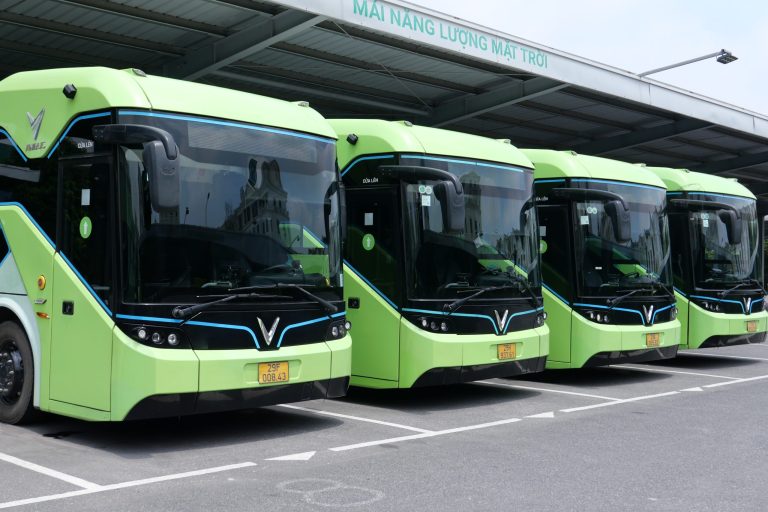
Hanoi operator Transerco introduced 53 VinFast electric buses on four routes on 5 and 6 October 2026, replacing diesel vehicles as the city works toward a fully converted public bus fleet by 2030. The deployments put 28 VinFast Green Bus vehicles on routes 22A and 22B, followed by 25 VinFast EB8 buses on routes 30 and 50.
According to the source report, the two additions form part of a city programme to replace petrol- and diesel-powered public buses with electric and green-energy vehicles. Under Transerco’s stated target, green-converted vehicles are to make up more than 51% of its fleet by the end of 2026.
VinFast Electric Buses Replace Diesel Vehicles
Transerco subsidiary Cau Buou Bus Enterprise introduced 28 medium-capacity VinFast Green Bus vehicles on 5 October. They serve route 22A between Gia Lam Bus Station and Kien Hung Urban Area, and route 22B between Giap Bat Bus Station and Do Nghia.
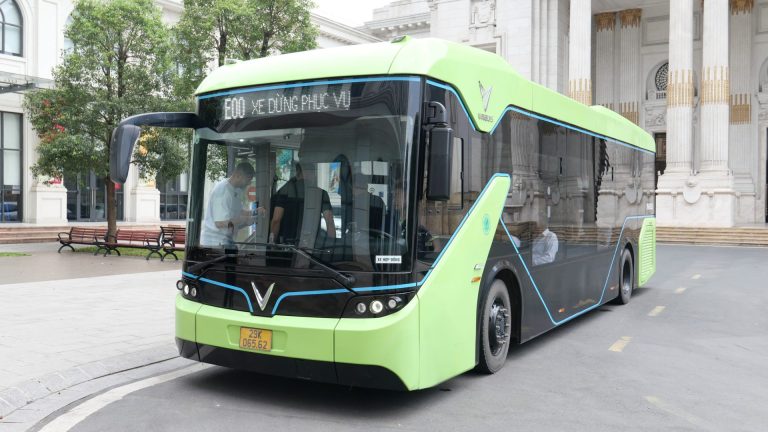
The buses replaced diesel vehicles previously used on both routes. Each has room for 60 passengers, a low-floor layout and equipment for passengers with disabilities. Their green Hanoibus livery includes decorative elements representing the peace dove and Khue Van Cac, a landmark associated with Hanoi’s Temple of Literature.
On 6 October, Transerco’s South Hanoi Passenger Transport Enterprise added 25 VinFast EB8 buses. They operate on route 30, between My Dinh Bus Station and Gamuda Urban Area, and route 50, between Long Bien and An Lac Urban Area in Hoai Duc.
The EB8 vehicles also have a 60-passenger capacity, low floors and accessibility equipment. Transerco said they carry the same green Hanoibus exterior design. All 53 buses in the two deployments were manufactured in 2026.
Hanoi Sets a 2030 Fleet Conversion Deadline
The revised municipal programme, adopted in May 2025, calls for all public buses to move from petrol and diesel to electric and green-energy vehicles by 2030. Inside Ring Road 4, the plan requires every operating bus to be electric. Transerco’s end-of-2026 target is to exceed 51% green-converted vehicles, with progressive replacement of the remaining petrol- and diesel-powered vehicles planned for 2027 through 2030.
The source reports Hanoi’s deadline is 20 years ahead of Vietnam’s national 2050 target. That national transport-sector programme was established under Decision No. 876/QD-TTg of 22 July 2022 and addresses green-energy transition and reductions in carbon and methane emissions.
Electric Buses Already Carry Hanoi Passengers
Electric bus operations in Hanoi began in December 2021. Figures released by the Hanoi Transport Management and Operation Centre and published by Vietnam’s Ministry of Construction in 2025 said electric buses had transported nearly 100 million passengers during approximately three years of operation.
A separate account of the city’s network reported approximately 2,000 electric buses in Hanoi during a May 2026 visit, including around 600 operated directly by VinBus, VinFast’s sister company. VinBus’s fleet had accumulated approximately 73 million kilometres by the end of 2025, according to that account.
The new deployments add vehicles to a network already operating electric buses and advance Transerco’s stated 2026 fleet target. The city’s next stated milestone is full conversion of its public bus fleet by 2030, with electric-only service required inside Ring Road 4.
For broader context on transit fleet decisions, see an electric bus research fleet, planned U.S. transit bus production and the wider electric-vehicle transition.


