AI tools can transform how travelers understand and respect local cultures, from translating menus in Hanoi to researching business customs in Tokyo. This guide features practical strategies and real-world examples from cultural experts and experienced travelers who use AI to prepare for meaningful interactions abroad. Learn how to use ChatGPT, Gemini, Claude, and other AI platforms to research etiquette, verify cultural nuances, and avoid common mistakes before stepping off the plane.
- Discover Norwegian Food Culture Through AI
- Research Batwa Culture Through ChatGPT
- Verify Brazilian Nuance After ChatGPT Research
- Explore Detroit History Through Perplexity
- Build Cultural Playbooks With ChatGPT
- Plan Meaningful Cultural Experiences With ChatGPT
- Prompt Claude for Specific Business Customs
- Find Osaka Rest Stops With AI
- Research Regional Jewelry Traditions With ChatGPT
- Restructure Bali Plans Around Nyepi
- Cross-Check Japanese Etiquette With Gemini
- Avoid Seville Dinner Mistakes With ChatGPT
- Learn Local Closing Vocabulary With AI
- Embrace Island Rhythms With ChatGPT
- Ask ChatGPT About Local Etiquette
- Confirm European Charging Etiquette After AI
- Adapt Tokyo Designs With AI Research
- Prepare Receipt Customs With ChatGPT
- Translate Hanoi Menus With Google Translate
Discover Norwegian Food Culture Through AI
In my work as a travel writer, I’m always curious about a place before I get there. I want to see the major sights, of course, but I also want to experience some of the rhythms of everyday life. AI tools have become a useful part of that research.
Before a recent trip to Norway, for example, I learned through AI research about the country’s strong coffee-and-bakery culture and its love of cinnamon and cardamom buns. No one had to talk me into experiencing that particular aspect of Norwegian life! In fact, the research came in handy whenever the weather suddenly took a turn for the worse: we knew exactly what to do—find a bakery, order coffee and buns, and wait it out.
I also asked what foods we’d commonly encounter on menus and what we should make a point of trying. AI helped prepare me for the fact that fish such as herring and mackerel would be common on Norwegian breakfast buffets. We went in with an open mind and gave fish for breakfast a fair try. My travel partner loved it. I ultimately decided that was one custom I was happy to leave in Norway—but I appreciated knowing what to expect and understanding it as part of the local food culture.
My research went beyond food. I used tools including ChatGPT and Gemini to ask about tipping, Sunday openings and social norms, learn a few Norwegian phrases, and even find out how people typically dress for dinner aboard Hurtigruten, Norway’s historic coastal voyage.
For me, AI is a useful way to learn about the local culture and customs of a destination before I arrive. Having that context helps me know what to look for and intentionally seek out experiences that give me a better sense of everyday life there.

Research Batwa Culture Through ChatGPT
I run a tour company in Uganda, and we see this happen organically all the time when travelers browse our itineraries. A perfect example happened recently with a client booking a 3-day gorilla trekking trip to Bwindi.
On the day-by-day activity schedule, she noticed a cultural tour activity called “Discovering, Meeting and Interacting with the Batwa community.” She immediately messaged us asking, “Who are the Batwa? What do you mean by interacting with them? Are they still bushmen?”
Instead of waiting for our office email reply, her natural instinct was to open ChatGPT right then and there. She used the AI tool to look up the Batwa’s history, their forest-dwelling lifestyle, their traditional cultural norms, and whether the community was welcoming to outsiders.
By the time my team actually replied to her initial message, she instantly fired back: “No, no, no, I actually already have a clue! I went and searched all about them on ChatGPT.” She was so completely fascinated by what the AI showed her about this unique culture that she told us, “This is the exact experience that makes me want to lock this trip in and travel with you.”
For her, AI wasn’t just a basic research tool; it was the exact spark that turned her curiosity into a confirmed booking.
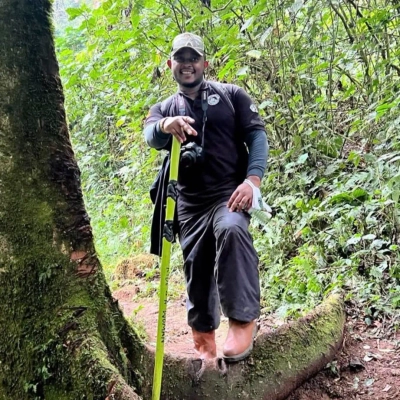
Verify Brazilian Nuance After ChatGPT Research
I use AI the same way I use translation technology at JR Language: as a first-pass cultural briefing, not the final authority. Culture has nuance, so I always sanity-check AI output against native speakers or local sources.
One specific example: before working on Brazil-focused travel content, I used ChatGPT to compare “Portuguese for Brazil” vs. “Portuguese for Portugal” beyond vocabulary. I asked about greetings, tone in hospitality copy, food references, formality, and what would sound too European for Brazilian travelers.
The most useful prompt was: “Tell me what a U.S. traveler or marketer would misunderstand about local customs in Brazil, and explain what to do instead.” That surfaces practical etiquette, not just trivia.
My rule: ask AI for “what could offend, confuse, or feel unnatural,” then verify. That’s where it becomes useful for travel–less about facts, more about avoiding tone-deaf behavior.

Explore Detroit History Through Perplexity
I run Detroit Furnished Rentals and a Detroit travel blog, so I’m constantly trying to help guests understand the city beyond “where should I eat?” I use Perplexity AI because it gives sourced answers I can cross-check fast.
One specific example: I asked it to explain Detroit’s French roots, Black cultural history, auto legacy, and how those show up in places a visitor can actually experience. That helped me connect guests to spots like the Detroit Historical Museum, Charles H. Wright Museum, DIA, Eastern Market, and the Riverfront with better context.
The trick is not asking, “What are the best things to do?” I ask, “What would a first-time visitor misunderstand about this city, and what local context should they know before going?”
Then I verify it against museum pages, local event calendars, and what we see on the ground with guests. AI is the rough draft; the city itself gets the final edit.

Build Cultural Playbooks With ChatGPT
I’m Runbo Li, co-founder and CEO of Magic Hour. I treat AI like a local friend who’s lived in a city for 20 years and has no filter.
Before any trip, I run what I call a “culture download” session with ChatGPT. Not the generic “top 10 things to do” stuff. I ask hyper-specific questions: What will offend people here? What’s the unwritten social contract at a dinner table? What do locals actually think about tourists doing X?
Here’s a concrete example. Last year I was heading to Japan for the first time. Instead of reading a travel blog written for mass appeal, I prompted ChatGPT with scenarios. “I’m at an izakaya with a Japanese business contact. Walk me through the first 15 minutes: what I should and shouldn’t do with my hands, my drink, my chopsticks, and when it’s appropriate to talk business.” The response was granular. Don’t pour your own drink. Wait for the “kanpai.” Never stick chopsticks upright in rice. Don’t jump into business talk until at least the second round.
Then I layered on follow-ups: “What are three things Americans commonly do in Tokyo that locals find rude but would never tell them?” That’s where the gold is. The stuff no guidebook prints because it’s too specific or too blunt.
The key insight is this: AI doesn’t get embarrassed by dumb questions. A real person might sugarcoat things or skip the awkward details. AI gives you the unvarnished playbook if you ask the right way. The quality of your cultural education is directly proportional to the specificity of your prompts.
I’ve done this for every trip since: Mexico City, Seoul, London. Each time I come away with a mental framework that makes me feel less like a tourist and more like someone who did their homework.
The best travel hack isn’t a packing list. It’s asking AI the questions you’d be too embarrassed to ask a human.

Plan Meaningful Cultural Experiences With ChatGPT
I use AI quite a bit when I travel, especially to get a better feel for a place before I arrive. I’ve traveled to London, Paris, Milan, Rome, Sicily, and Budapest, and I used ChatGPT in each destination to help me understand the basics — language, etiquette, customs, and the little things that keep you from looking completely clueless. London notwithstanding on the language part.
I’m now planning a trip with my fiancée through Kyoto, Kanazawa, and Tokyo, followed by Amanpulo in the Philippines, and I’m using it much the same way.
Kyoto is probably the best example. I asked ChatGPT to help me find something more meaningful than simply another great restaurant, and it led me to a Michelin-level dining experience that could include geishas. It also helped me understand the tradition, etiquette, and history behind the experience. We ultimately arranged for two geishas and an interpreter, which should make it feel less like something we are watching and more like something we can actually understand.
It has also helped us understand the differences between Kyoto, Kanazawa, and Tokyo — dining etiquette, tipping, behavior on trains, temple and shrine customs, and even the general pace of each place. Somehow, it also found sand volleyball courts on the rooftop of a mall in Tokyo, which is exactly the kind of oddly specific experience I look for when I travel.
For Amanpulo, I’ve used it to learn more about Filipino customs, food, and the local setting beyond the resort itself.
I did the same thing in Europe. In Paris, Milan, Rome, Sicily, and Budapest, I had ChatGPT teach me enough of the language to greet people, order food, ask a few basic questions, and at least make the effort. Just as useful was understanding what not to do. Those small details matter, and they usually make the difference between simply visiting somewhere and actually feeling connected to it.
That is where AI has become most useful to me. I like luxury, but luxury by itself is never really the point. I want to understand where I am, make the effort to speak a few words of the language, know what is considered respectful, and come away with an actual experience.
Of the AI tools I’ve used, ChatGPT has been the most useful. Although I still think it needs a normal name. Bob. Arnold. Anything. Typing “ChatGPT” every time feels unnecessarily formal for something I now use as a travel researcher and adviser.

Prompt Claude for Specific Business Customs
Before a client trip to Dubai last year I asked Claude to walk me through the business etiquette differences I’d actually run into in a meeting, not the generic “shake hands and say salaam” tourist advice. It flagged something specific: scheduling a lunch meeting during Ramadan is a real misstep even with non-fasting colleagues present, out of respect, and meetings often run later into the evening once the fast breaks. I moved a client pitch from noon to 7 p.m. based on that, and the client’s team was visibly more relaxed and engaged than they would have been mid-afternoon.
I do the same before trips into France for clients there: asking for the specific formalities around vouvoiement in a first meeting versus later ones, since getting that wrong reads as either overly stiff or oddly familiar depending on the room.
What I’ve learned is that generic cultural tips are close to useless. “Be respectful of local customs” tells you nothing you can act on. The useful version is a specific behavior tied to the exact situation you’re walking into, which means the prompt matters more than the tool. I ask for the one thing that would visibly go wrong if I didn’t know it, not a general overview.

Find Osaka Rest Stops With AI
I use a generative AI chat assistant with the exact postcode and ask, “What would a local do in this situation, and what etiquette should I know?” During peak season in Osaka, hotel options were unavailable or expensive, and that prompt surfaced a nearby Kaikatsu Club with a private booth, Wi-Fi and on-site refreshments. It showed me something a conventional hotel search had missed: Japanese internet cafes can serve as practical places to rest or work. I then verify the venue’s facilities and rules on its official website before going.

Research Regional Jewelry Traditions With ChatGPT
Running marketing for a fine jewelry brand means I travel regularly to spot design trends, visit artisan communities, and understand what resonates aesthetically in different regions. That eye for visual culture translates directly into how I use AI when prepping for a trip.
I use ChatGPT to research the aesthetic and artistic identity of a destination before I arrive—not restaurants, but things like local craft traditions, dominant color palettes in architecture, or what materials artisans there have historically favored. Before a sourcing trip, I asked it specifically: “What design movements and handcraft traditions is this region known for, and how do they show up in everyday life?” The answers shaped how I approached conversations with local makers in a way no travel blog could.
The real unlock was asking follow-up questions about how locals wear and gift jewelry—what occasions matter, what metals or stones carry cultural meaning. That kind of context helped me engage authentically, not like someone checking off tourist boxes.

Restructure Bali Plans Around Nyepi
Flew into Bali the first time with my wife before our daughter was born, and the honest answer is I used ChatGPT to front-load context before we landed. Not for restaurant lists, but for the stuff that’s easy to get wrong without realizing it: temple dress codes, which hand to use for offerings, why you don’t point your feet toward shrines. Things that would’ve taken me a week of observation to pick up organically.
The specific example that stuck: I asked GPT-4 to explain the Balinese calendar system and why certain days affect local business hours and ceremonies. We’d planned a day trip that landed on Nyepi, the day of silence, where the entire island shuts down, no lights, no movement outside, no flights. I had no idea until the model flagged it when I described our dates. We restructured the whole itinerary around it.
Now with a toddler in the mix, splitting time between Tallinn and Bali, I use it differently. I ask about local norms around children specifically, what’s considered rude when a kid is loud in a temple precinct, whether it’s expected to ask permission before locals interact with her. The answers aren’t always perfect and I’ll cross-reference with expat forums or local contacts, but it compresses weeks of social calibration into an hour.

Cross-Check Japanese Etiquette With Gemini
AI is useful for cultural preparation when treated as a starting point rather than an authority. Before a recent business trip to Japan, I used Google Gemini to understand everyday etiquette around greetings, business cards, dining, and public behavior, then cross-checked the guidance against Japan’s official tourism resources. One detail that stood out was the importance of receiving a business card with both hands and taking a moment to acknowledge it rather than immediately putting it away. That small cultural cue helped frame professional interactions with greater respect. The real value, however, comes from combining AI-generated context with authoritative local sources and firsthand observation. In a business environment, cultural awareness is less about memorizing rules and more about avoiding assumptions and approaching unfamiliar customs with curiosity.

Avoid Seville Dinner Mistakes With ChatGPT
The question I ask is what would be rude. That is the thing a guidebook buries on page forty and a local would tell you in the first minute. Before a few days in Seville, I asked ChatGPT what happens if you turn up at a restaurant at seven in the evening, and it told me plainly that I would be sitting alone while the kitchen was still setting up, because dinner there starts closer to ten. That one answer moved every meal we ate across five days and stopped us wandering round a city we had decided was empty.
The prompt does more work than the tool. Asking what the customs are gets you a list anyone could have written from a shelf. Asking what visitors here get wrong, or what a local would find odd about how I am behaving, gets you something you can use on the pavement. I ask for the awkward version, the specific mistake, and tipping habits and greetings arrive attached to it without my having to guess which ones matter.
What I keep it away from is anything with money or a timetable on it. It is confident about opening hours and transport passes that changed two years ago and will not warn you that it is out of date. Etiquette moves slowly, so it sits on firm ground there. Prices and schedules I check with whoever runs the thing, and I have been caught out once by not bothering.

Learn Local Closing Vocabulary With AI
Most of my travel is to real estate brokerages, and the local customs that matter to me are professional ones. The United States runs closings differently across 50 states and the differences are not small. Some are attorney states where a lawyer sits at the table. Others run through title companies. Earnest money sits in a broker trust account in one place and with an escrow agent in another. Get that wrong in the first ten minutes of a meeting and you are a software vendor who did not do the homework.
Before a trip to upstate New York I had an AI assistant brief me on how closings run there, then checked the parts I planned to say out loud against the state association’s own material, because a model will produce a confident answer about escrow law that is two years stale. What it gave me was the right question to walk in with: who uploads the final settlement statement when an attorney is running the file. In Texas that question has a different answer and a different owner.
The meeting went differently for it. The office manager relaxed about four minutes in, because I was asking about her process in her own vocabulary.
Use the model to learn the vocabulary and the shape of the local practice. Verify anything you would be embarrassed to be wrong about in the room.

Embrace Island Rhythms With ChatGPT
My role at Block Island Ferry puts me in direct contact with visitors who need quick ways to fit into island routines like relaxed pacing and simple transport choices.
I use ChatGPT to pull out details on those customs ahead of peak season. One prompt covers how locals treat spontaneity during outings and why bikes suit narrow paths better than cars in busy months.
This approach lets me suggest practical steps like leaving extra time for beachcombing or historical walks without overplanning.
Travelers then arrive ready to respect the slower flow and enjoy the scenery on their own terms.

Ask ChatGPT About Local Etiquette
I use AI less like a tour guide and more like a local etiquette cheat sheet. Before a trip, I’ll ask ChatGPT things like, “What would a first-time visitor accidentally do here that locals find rude, weird, or painfully touristy?” For example, I’ve used it to sanity-check tipping norms, restaurant etiquette, dress expectations, greetings, and little social cues that travel blogs tend to bury under 2,000 words of fluff. The real value is asking follow-ups like, “Okay, but what would a local actually do?” That turns generic travel advice into something way more practical. AI won’t replace talking to actual people once you arrive, but it’s great for avoiding the cultural equivalent of walking into someone’s house with muddy shoes.

Confirm European Charging Etiquette After AI
I use it for the practical customs of charging abroad, which no guidebook covers. Before driving into the Netherlands and Germany, I asked for a rundown of how public chargers are paid for in each country, what the subscription cards are for, whether contactless is normal, and what the etiquette is on moving your car once it has finished. The answer was roughly right, and more useful than that, it gave me the vocabulary to check the rest properly.
That second part is where it earns its keep. Knowing that leaving a car sitting on a charger after it is full is considered rude in some places and fined in others changed how I planned my stops and how long I lingered over lunch. I then verified the payment side with the network operators themselves, because a model will state a card policy with total confidence and be a year out of date.
The way I would put it to another driver is that these tools are good at telling you what to ask and unreliable at answering it. I lost 45 minutes in a car park in Rotterdam trusting a summary about contactless payment. Now I use it to build the list of things to confirm, then confirm them.

Adapt Tokyo Designs With AI Research
I use AI as a fast cultural scanner to adapt product stories, sizing cues and marketing tone before entering a new market. For example, when preparing a capsule inspired by Tokyo streetwear, I asked an LLM for concise summaries of local style drivers, common fabric preferences, and relevant social norms for photoshoots; then cross-checked the model’s points against local creators’ Instagram and niche forums.
That combo—AI for rapid synthesis plus direct local sources for validation—keeps collection development both efficient and respectful.

Prepare Receipt Customs With ChatGPT
Before a trip, I ask a general assistant, usually ChatGPT, what the receipt and tipping conventions are in the country I am going to. It sounds trivial. It decides whether I come home with paperwork a finance team can process or a wallet of thermal paper nobody can read.
Two questions do most of the work: whether service is included by default, and what the local word for an invoice is so I can ask for one properly. That second one has saved me more awkward conversations than any phrasebook.
Working in expense software makes you notice this. A lot of what people describe as a culture gap on a business trip is a paperwork gap, and a few minutes of asking beforehand clears most of it.

Translate Hanoi Menus With Google Translate
On a family trip to Vietnam, AI and translation tools genuinely changed the experience, less for reading up on customs beforehand and more for navigating them live.
The specific example was standing in front of a menu in Hanoi with no English on it. Google Translate’s live camera turned it readable instantly, so we could actually order what we wanted rather than guessing. The voice mode also rescued us during a taxi mix-up, translating back and forth until it was sorted.
The one tip I would pass on is to download the offline language pack before you go, since connection is not always reliable exactly when you need it most.
What made it valuable was removing the friction that usually keeps you at arm’s length from a place. Being able to understand and be understood in the moment let us engage with the local culture directly rather than through a barrier.