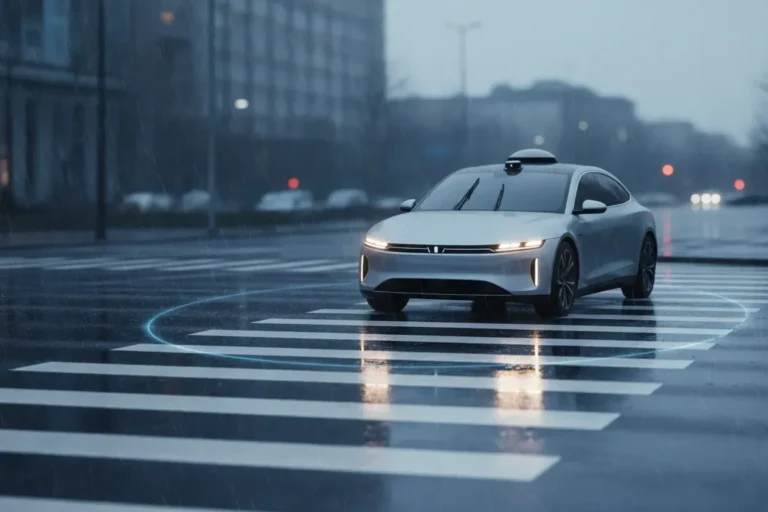
Autonomous vehicles promise to transform transportation, but serious safety concerns remain that the industry must address before widespread adoption becomes viable. This article examines eighteen critical areas where autonomous vehicle safety requires immediate attention, drawing on insights from leading experts in automotive engineering, cybersecurity, and regulatory policy. From supplier quality controls to liability frameworks and infrastructure coordination, these concerns reveal the complex technical and ethical challenges that must be resolved to protect passengers and pedestrians alike.
- Thwart Systemwide Fleet Compromise
- Prepare Autonomy for Messy Global Handovers
- Prevent Complacency During Sudden Takeovers
- Detect and Communicate with Fast E Bikes
- Protect Medically Vulnerable Riders with Safeguards
- Confront Erratic Road Behavior with Rigor
- Educate Drivers and Clarify Liability
- Enforce Multi Stage Supplier Quality Controls
- Enable Real Time Vehicle Infrastructure Coordination
- Account for Vertical Overhead Impact Hazards
- Monitor Onboard Agents for Anomalies
- Keep a Person in the Loop Checkpoint
- Standardize Technician System Maintenance Procedures
- Add Human Context to Machine Judgments
- Harden Processes and Data Foundations
- Prioritize Timely Candid Incident Disclosures
- Guarantee Accessible Transfers and Precise Arrivals
- Define Accountability for Unavoidable Crash Decisions
Thwart Systemwide Fleet Compromise
Working in automotive cybersecurity, I’ve seen how rapidly the attack surface has shifted from individual components to entire connected fleets.
My biggest concern is fleet-scale disruption. As vehicles become connected through cloud services, APIs, and AI interfaces, a single point of compromise can influence how thousands of vehicles behave simultaneously. We’ve already seen early signals: coordinated ride requests causing dozens of autonomous vehicles to converge on the same location, effectively creating a physical DDoS on city streets.
The challenge is no longer just building a safer car. It is securing a transportation system that runs on software, because you cannot pause a city’s streets while patching a vulnerability.

Prepare Autonomy for Messy Global Handovers
My biggest concern is what happens to safety when autonomy meets cross-border reality: parking garages, ports, customs lots, and dense European streets where signage, lane markings, and “human negotiation” are inconsistent. In my world (30+ years moving cars and household goods from the US to Poland/Europe), I see how even perfectly fine vehicles get thrown into situations their sensors and maps weren’t built around.
One concrete observation: vehicles sit for weeks in staging yards and then get moved in tight spaces by different handlers–ramps, forklifts, steel containers, low light, wet ground. I’ve watched a loaded SUV misjudge a short ramp angle and scrape hard enough to tear a bumper cover; that’s with a human driving slowly, and it’s exactly the kind of low-speed, high-consequence geometry an autonomous stack can struggle with when it loses clean lane references.
A personal “this is why I worry” moment came from prepping cars for ocean transport: we require the battery to be charged and fuel kept low, and sometimes the car’s state-of-charge drops after sitting. If an autonomous vehicle depends on stable power and sensor calibration, that “it sat too long in a yard” variable becomes a safety factor–especially when it’s restarted and immediately asked to maneuver in a chaotic port.
If you want a brand example: Teslas are common in US-to-Poland shipments because people buy them in the US market, and the hardware is capable–but the operational environment changes fast once it’s off the nice suburban test loop. My worry isn’t highway cruising; it’s the messy handoffs and degraded conditions between purchase, port, ocean, customs, and first drives on unfamiliar roads.

Prevent Complacency During Sudden Takeovers
My biggest concern with these cars is this: we’re at a weird point where the tech is good enough to let you space out while driving, but not good enough to actually handle all of that without any human input. I’ve seen this in action at tech shows, and I’ve talked to the people who fix these things. You’re cruising down the highway, and then suddenly, out of nowhere, there’s a weird construction zone or a storm front, and suddenly this car is going to need YOU to take over in two seconds. Good luck with that if you’ve been staring at a phone screen. And let’s be real, after all these years of playing in the automotive space, I know how people behave in these things. We’re lucky if we’re paying attention when we’re supposed to be driving. And then we’re going to add this to the equation, this idea that we don’t need to be paying attention? That’s a recipe for disaster. Snow, heavy rain, sun glare – sensors still struggle with stuff regular drivers deal with daily.

Detect and Communicate with Fast E Bikes
E-bikes are basically invisible to most AV systems right now, and that’s a real problem.
The sensors on these vehicles are built to spot cars and pedestrians. An e-bike on motor assist doesn’t fit either box. We’re moving faster than a typical cyclist, sometimes hitting 40 km/h, but we take up a fraction of the space a car does. In my experience watching how traffic behaves around e-bikes, most drivers already struggle to judge our speed and intentions. An AV doing the same job with a camera and a decision algorithm is not going to do better.
The part that actually worries me is what happens when a rider tries to anticipate the vehicle. With a human driver you get hints. They slow slightly, they look over, something tells you they’ve noticed you. With an AV there is nothing. No feedback at all. So riders are left making assumptions about a machine that may or may not have registered them as a real obstacle.
E-bike numbers are growing fast and AV pilots are rolling out in the same cities at the same time. That overlap needs to be taken seriously before it produces a pattern of incidents that forces the conversation. The technology to address it exists. Right now it just isn’t being prioritized.

Protect Medically Vulnerable Riders with Safeguards
My biggest concern is autonomous vehicles confidently transporting people who are medically or cognitively unsafe to ride without a sober, responsible human in the loop–especially post-procedure sedation, relapse risk, or acute withdrawal. I run a physician-led residential detox for high-functioning professionals, and I’ve seen how quickly orientation, judgment, and impulse control can shift hour-to-hour even in people who “look fine.”
The personal observation: we do daily clinical re-evaluations and 24/7 monitoring because alcohol/opioid withdrawal, sleep deprivation, and anxiety can create sudden confusion, agitation, or fainting risk. I’ve watched a stable, articulate executive in the morning become disoriented by afternoon and attempt to leave care; in a normal car, a staff member can redirect, assess, and stop them from making a dangerous choice–an AV can’t read “I’m about to panic and bolt” the way trained humans do in real time.
Safety-wise, the weak point isn’t the driving task–it’s the handoff of responsibility when the passenger is impaired, dissociated, or determined to self-harm. If the system’s only tools are “continue,” “pull over,” or “call support,” you can end up with a vulnerable person stranded in an unsafe place or being transported somewhere they shouldn’t be without anyone validating consent, capacity, or destination.
A brand example: Waymo. I’d want hard safeguards around rider verification and “medical vulnerability modes” (e.g., verified caregiver ride, limited destination changes, rapid connection to a live trained responder) because in early recovery, privacy and autonomy matter–but so does not giving a medically unstable person a frictionless way to make a catastrophic decision.

Confront Erratic Road Behavior with Rigor
My biggest concern about the safety of autonomous vehicles is how they handle unpredictable human behavior in real-world traffic, particularly when pedestrians, cyclists, or other drivers act erratically. I’ve observed early pilot programs where AVs struggle to make split-second decisions in complex urban environments, sometimes hesitating or overcompensating in situations a human driver would navigate instinctively. While the technology is improving rapidly, edge cases remain a challenge, and even a single failure in judgment could have serious consequences. This makes rigorous testing in diverse conditions, continuous learning algorithms, and clear safety protocols essential before widespread adoption.

Educate Drivers and Clarify Liability
My biggest concern is the gap between what autonomous systems are tested to handle and what actually happens on real roads. At Benzel-Busch, we’ve been deep in the Mercedes-Benz ecosystem long enough to watch driver-assistance technology evolve from basic cruise control to near-autonomous systems — and the edge cases still catch people off guard.
The clearest pattern I’ve seen: drivers over-trust the system the moment it works flawlessly a few dozen times in a row. That false confidence is dangerous. A customer once told me their vehicle “just knew” to stop — they didn’t understand they were still the last line of defense.
The liability question also keeps me up at night. When something goes wrong, is it the manufacturer, the software company, the dealer who delivered the car? That chain is still legally murky, and as a dealer, I sit right in the middle of that relationship with the customer.
From the Dealer Board Chair role, I’ve pushed hard for clearer consumer education standards around these features. Selling the technology without properly explaining its limits isn’t selling a promise — it’s setting someone up for failure.

Enforce Multi Stage Supplier Quality Controls
My biggest concern with autonomous vehicle safety is inconsistent quality in overseas-sourced components like sensors and ECUs, where factories skip multi-point inspections and deliver defects that real-world vibrations expose.
With 40+ years manufacturing automotive products through global factories for Fortune 500s at Altraco, I’ve seen this firsthand—a Vietnamese supplier once shipped deformed metal housings for vehicle mounts due to poor first-article checks, mirroring how AV sensors could fail under stress. We fixed it with supplier scorecards and in-process audits, hitting 99.6% on-time delivery, but without that vigilance, a single defect in AV lidar calibration could cascade into collisions. Diversify factories and demand documented multi-stage testing upfront to catch these risks before they hit roads.

Enable Real Time Vehicle Infrastructure Coordination
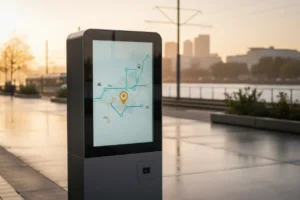
My biggest safety concern for autonomous vehicles is the lack of real-time coordination between vehicles and the physical infrastructure that supports them. In our work developing infrastructure as an autonomous agent, we observed that the current decision loop, from sensor to data to human review to action, is too slow to address sudden structural or environmental changes. That delay can leave self-driving systems with outdated information and limited ability to respond to emergent hazards. For example, our concept of a bridge with embedded sensors and a local AI that communicates with nearby self-driving cars for load balancing shows how faster, local coordination could prevent dangerous situations. Ensuring real-time, local autonomy between infrastructure and vehicles should be a priority for improving AV safety.

Account for Vertical Overhead Impact Hazards
After 30 years of protecting Utah homes from 240 MPH winds and massive snow loads, I worry autonomous vehicles like Waymo aren’t programmed to handle “overhead” kinetic threats. My team uses HOVER 3D visualization to map roof pitches because we know exactly how dangerous a 500-pound “snow bomb” can be when it slides off steep shingles.
In my experience, sensors focus on the horizontal plane, but a major Utah thaw turns residential eaves into unpredictable launch pads for ice and debris. I’ve seen ice dams rip heavy-duty gutters clean off a house, and an AV idling in a driveway wouldn’t recognize that the roof above is a structural hazard about to fail.
We install self-regulating heat cables to prevent these disasters, but without that specific mitigation, the exterior environment becomes a vertical obstacle course. My concern is that an autonomous system might accurately detect a pedestrian while failing to calculate the trajectory of a sliding snow mass that can crush a vehicle’s roof in seconds.
Monitor Onboard Agents for Anomalies
My biggest concern is that an autonomous vehicle’s onboard AI agents could be compromised or behave in harmful ways without clear human oversight. In my work addressing insider risk I have seen AI bots act like superusers, moving data and taking actions without a human clicking approve. That experience taught me you cannot rely on blocking specific components; you must watch behavior to detect intent and anomalies. I believe vehicle safety must include continuous behavioral monitoring of onboard agents and clear ways to surface suspicious actions to human teams.

Keep a Person in the Loop Checkpoint
Coaching high school football, I’m constantly thinking about split-second decisions under pressure—and that’s exactly where my concern about autonomous vehicles lives. These systems can’t read a chaotic Friday night parking lot after a Perry Hall game the way an experienced human can.
My real worry is environmental unpredictability. A sensor calibrated for highway driving behaves very differently on rural Harford County roads in a November rainstorm. I see that disconnect regularly driving between Bel Air and away games.
At ProMD, we use AI technology (our Entity Med Simulator) but always pair it with a trained clinician making the final call. Autonomous vehicles are being sold without that same human checkpoint built into the decision loop—and that asymmetry concerns me more than the technology itself.

Standardize Technician System Maintenance Procedures
My biggest concern with autonomous vehicles isn’t AI algorithms, it’s human integration. We’ve seen that even minor workflow errors in auto repair can cascade into costly mistakes. Translating that to AVs, I worry about how these systems interact with human drivers and mechanics performing maintenance. It is important to note that most vehicle accidents still involve human factors, meaning even self-driving cars are vulnerable when humans miscommunicate, misdiagnose, or override systems.
Technology isn’t the weak point; people are. My experience helping workshops automate job tracking has shown that clear, enforced processes prevent errors far more than relying on individual vigilance. For AVs, we need similar discipline: standard procedures for maintenance, testing, and interaction with human-driven vehicles. Autonomous safety won’t come from smarter code alone; it will come from software-driven workflows that force humans and machines to cooperate flawlessly.

Add Human Context to Machine Judgments
My biggest concern is that autonomous vehicle systems can act on detected patterns without the full context a human would have, which can create unsafe situations. In my work a tool analyzed three years of campaign data and correctly predicted a two-week delay, but it missed the simple fact that the client’s CEO was on vacation. That taught me machines can surface accurate trends while still lacking crucial situational awareness that a human provides. For vehicles, that gap between pattern recognition and human context is where safety issues are most likely to arise, so human interpretation and clear communication must remain central.

Harden Processes and Data Foundations
My biggest safety concern for autonomous vehicles is that AI will amplify underlying operational and data gaps, producing failures in rare or unexpected driving situations. When we added an AI agent to handle customer questions, scaling up exposed onboarding and knowledge base gaps we had not noticed. That experience taught me that AI systems reveal and depend on the quality of the processes and data beneath them. If similar gaps exist in vehicle data, sensors, or procedures, they could lead to unsafe outcomes on the road.

Prioritize Timely Candid Incident Disclosures
My biggest concern is the lack of clear, timely transparency from companies when an autonomous vehicle incident or safety concern occurs. In my work with consumer brands I have seen that when safety issues or recalls arise, staying silent feels like avoidance and erodes public trust. That pattern applied to AVs would slow adoption and invite heavier regulation rather than build confidence. My observation leads me to push for straightforward, factual updates and clear disclosures to protect users and preserve trust.

Guarantee Accessible Transfers and Precise Arrivals
As someone who places medical professionals and relocating families in luxury furnished apartments near Chicago’s top hospitals like Shirley Ryan AbilityLab and Northwestern Memorial, I’ve seen how transport reliability directly affects recovery and work.
My biggest concern is autonomous vehicles’ ability to safely accommodate passengers with mobility challenges—such as wheelchair users or those with medical equipment—ensuring secure loading, stable rides, and precise drop-offs at complex hospital entrances.
A client recovering at SRA shared how standard rideshares fumbled her powered wheelchair during a snowy transfer, delaying therapy by 45 minutes; we secured her Atwater Apartment stay nearby, but it highlighted AVs needing specialized accessibility protocols.
Chicago’s medical district demands this—verify AV providers’ ADA compliance ratings before booking extended stays.

Define Accountability for Unavoidable Crash Decisions
Our biggest concern is the legal and ethical ambiguity surrounding decision making in unavoidable accident scenarios. Autonomous vehicles rely on probabilistic models that prioritize certain outcomes, yet society has not fully agreed on acceptable tradeoffs. In high speed situations, milliseconds determine how algorithms interpret risk and assign priority. Without clear standards, liability and public trust become fragile.
This concern grew as we followed early deployment trials where incidents sparked debates over responsibility between manufacturers, software providers, and operators. Observing how quickly narratives shifted after isolated crashes revealed how sensitive public perception remains. Even statistically safer systems can lose legitimacy if accountability frameworks lag behind innovation. For autonomous vehicles to scale responsibly, governance must evolve alongside technical capability.