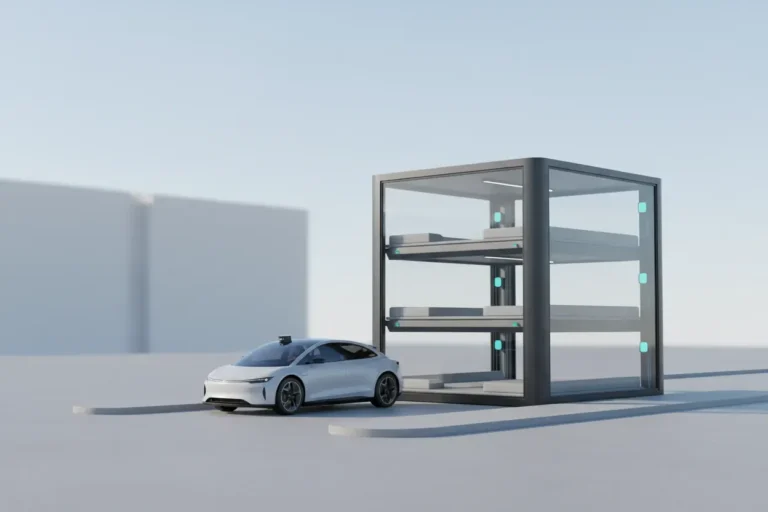
Autonomous vehicles are set to transform how parking structures are designed, operated, and utilized in the coming decades. This shift will affect everything from space requirements and power infrastructure to passenger drop-off zones and remote storage facilities. Industry experts share their insights on five critical areas where parking professionals should focus their planning efforts today.
- Build Scalable Power Hubs from Start
- Enable Precise Bay Alignment with Floor Sensors
- Prioritize Safe Fast Handoff Zones
- AVs Shrink Footprints Unlock New Uses
- Shift Storage to Remote Shared Depots
Build Scalable Power Hubs from Start
As president of Grounded Solutions, I design electrical systems for commercial EV charging every day, which gives me a direct view into how vehicles will interact with parking infrastructure.
One change I expect is that parking lots and garages will embed dedicated high-capacity electrical hubs with pre-sized conduit runs and panel space right at the design stage. This mirrors the scalable layouts we install for clients who start with a few chargers and expand later.
We already coordinate utility upgrades and load management controls during commercial projects so multiple stations can share power without spikes or interruptions. Autonomous fleets will demand the same setup from day one to keep charging efficient across dozens of vehicles at once.
That upfront electrical planning will become standard so facilities avoid costly retrofits as self-driving technology scales.

Enable Precise Bay Alignment with Floor Sensors
Running Pro Express for 18 years has meant optimizing parking for Sprinter vans and box trucks that make urgent liftgate deliveries across tight urban sites every day.
Autonomous vehicles remove the need for driver sightlines and manual positioning that currently dictate garage layouts.
One specific change I anticipate is expanded use of embedded floor sensors and alignment guides so AVs can dock precisely to loading points without extra clearance for human error.
This setup would let my fleet maintain the same speed on time-critical hauls while facilities reclaim space once reserved for driver comfort.

Prioritize Safe Fast Handoff Zones
One specific change I expect is that parking lots and garages will be designed less for people walking to and from parked cars and more for autonomous vehicles storing themselves efficiently after dropping passengers off.
Today, most parking design is built around the driver: wide lanes for turning, extra door clearance so people can get in and out, stair and elevator access close to the best spaces, and highly visible wayfinding so someone can find their car later. If autonomous vehicles become common, a lot of that logic changes. The valuable real estate shifts to curbside pickup and drop-off zones, while the actual vehicle storage can move farther away and become much denser.
In practical terms, I think garages will need fewer oversized access aisles and fewer premium spaces near building entrances, because no one has to open a door or remember where the car is parked. Vehicles could park much closer together, or even be routed to remote structures that function more like automated storage than traditional parking. That could free up central urban land for retail, housing, green space, or wider pedestrian areas.
From a consumer and vehicle-education perspective, this also changes what people value. Instead of asking, “How convenient is this parking spot for me?” people will ask, “How quickly can my vehicle arrive when I summon it, and how safely is this pickup area managed?” That means traffic flow, curb management, pedestrian separation, and software coordination become more important than painted stall counts.
The biggest design upgrade, in my view, is the conversion of parking from a human-centered storage problem into a fleet logistics problem. Once that happens, the most important part of a parking facility may no longer be the parking itself. It may be the handoff zone where people enter and exit safely and quickly.

AVs Shrink Footprints Unlock New Uses
One change I think we’ll see is parking lots becoming dramatically smaller and more flexible. Human drivers need wide lanes, generous spacing, and room to maneuver. Autonomous vehicles won’t. They can drop passengers off at the entrance and then park themselves much more efficiently, almost like books being neatly shelved.
As an agency that works with clients across real estate, transportation, and commercial development, we’re already seeing conversations shift from “How many parking spaces do we need?” to “What else could we do with that space?” That’s a big deal because parking consumes an enormous amount of valuable land.
The long-term opportunity isn’t just better parking. It’s less parking. Garages could be built with tighter footprints, and surface lots could be redeveloped into retail, housing, green space, or community amenities. The most interesting impact of autonomous vehicles may be that parking becomes less visible. Instead of designing places around where cars sit, we’ll be able to design them around where people want to be.

Shift Storage to Remote Shared Depots
I think the biggest change is that parking stops happening where people are. Land in city centres is expensive, and the only reason we store cars there now is that someone has to walk back to them. Once the driver is out of it, the car can take itself somewhere cheaper on the edge of town, park, and come back when you call it. So the multi-storey next to the office or the attraction starts to look like a poor use of very valuable ground.
The specific change I would point to is at home. Instead of every house needing its own garage, you could send the car to park somewhere shared and rent your own space out, or not build one in the first place. There is a real catch, which is the emergency. If you need the car quickly and it is parked on a depot across town, that saving suddenly costs you. So I do not think the home garage goes away. I think how close you keep your car becomes a decision about cost, weighed against those rare moments you need it straight away.