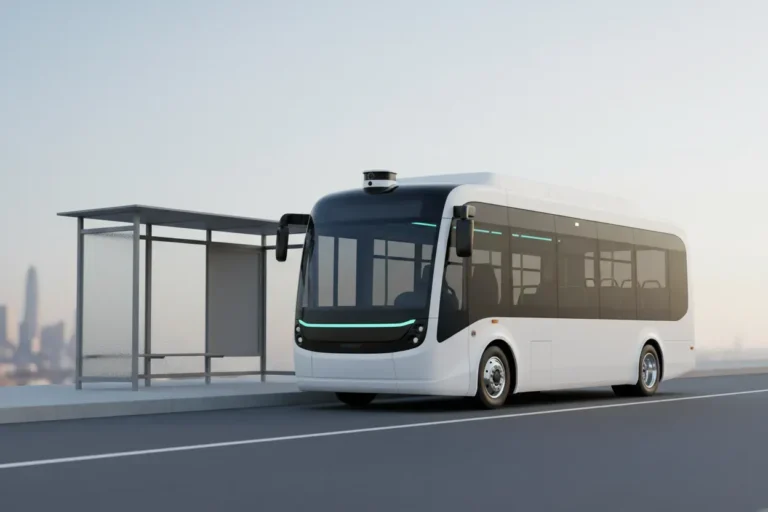
Autonomous vehicles promise to transform public transit, but the path forward requires careful planning across legal, technical, and social dimensions. Leading experts in transportation, urban planning, and technology policy share their insights on the critical challenges cities must address before self-driving buses become mainstream. From liability frameworks to data standardization, these professionals outline the concrete steps transit agencies need to take today to prepare for tomorrow’s automated systems.
- Standardize Data to Unlock Precision Service
- Partner Early to Protect Ridership and Dignity
- Secure Evidence Rights and Budget for Litigation
- Design Around Trust and Accessibility
- Address Road Quality and Expand Connections
- Prepare for Liability Transfer
Standardize Data to Unlock Precision Service
Autonomous vehicles will accelerate the shift to dynamic, data-defined public transit when paired with standardized, real-time datasets. At Mobito, we help operators use anonymized origin and destination flows, dwell time, road health, and probe data to find underserved demand, adjust routes, launch on-demand microtransit, and enable V2X features like signal priority and predictive braking alerts. The opportunity is precision service that meets riders where they are, while the key challenge is consistent data standardization and exchange across fleets and agencies.

Partner Early to Protect Ridership and Dignity
I’ve spent decades in the luxury automotive space and currently chair the Mercedes-Benz Dealer Board, so I’m watching the autonomous vehicle evolution closely from both the retail and manufacturer side. Here’s what I’m seeing play out.
Autonomous vehicles will complement public transit rather than replace it—think last-mile solutions connecting people from train stations to their final destinations. Cities like Phoenix and San Francisco are already testing this with Waymo shuttles feeding into existing transit hubs. The real opportunity is solving the “I don’t want to drive but the bus doesn’t go there” problem that keeps people in personal vehicles.
The biggest challenge for public transit agencies will be the business model disruption. When autonomous ride-sharing becomes cheaper than owning a car, it could cannibalize bus ridership in suburban areas while potentially increasing density in urban cores. Transit authorities need to partner with AV companies now rather than compete against them later.
From a dealer perspective, we’re already seeing the shift at Benzel-Busch with Mercedes’ Drive Pilot system—customers want the technology but still value the premium ownership experience. Public transit could learn from this: people will pay for convenience, reliability, and dignity in their transportation experience, whether that’s a Mercedes or an autonomous shuttle.

Secure Evidence Rights and Budget for Litigation
I’ve been handling vehicle crash cases for over 40 years, and I’m now deep in autonomous vehicle litigation—cases against Tesla, Waymo, and other manufacturers. So I’m watching this from the wreckage backward, which gives me a different view than most.
Here’s my prediction: autonomous vehicles will absolutely devastate small and mid-sized public transit systems that can’t afford the tech or the lawyers when it breaks. We’re already seeing it—cities deploy pilot programs, someone gets hurt, and suddenly they’re facing product liability exposure they never budgeted for. A Georgia municipality running autonomous shuttles could be on the hook for sensor failures, phantom braking incidents, or wrong-way navigation just like a private company would be. Most transit agencies don’t have the legal infrastructure or insurance depth to survive even one serious wrongful death case.
The biggest challenge nobody’s talking about is the evidence problem. When an autonomous bus or shuttle crashes, the data is controlled by the manufacturer—not the city, not the victim, not even the transit authority. I’ve fought to get black box data, sensor logs, and software version records. Public transit agencies will be at the mercy of tech companies. That’s a power imbalance that will cripple accountability and public trust.
The opportunity? If a city wants to survive this, they need to write contracts that give them full data access and independent audit rights before they ever put an AV on the road. They also need to budget for litigation, because it’s coming. The settlements and verdicts we’re seeing in California and Arizona are just the beginning—Georgia’s turn is next.

Design Around Trust and Accessibility
The biggest impact won’t be replacing buses or trains. It’ll be in fixing the parts of public transit people quietly hate but rarely talk about: the gaps. The awkward first mile and last mile. The long, unreliable wait when you’re almost home. Autonomous vehicles are well-suited to live in those in-between moments, acting less like a replacement system and more like connective tissue.
Imagine transit systems that stop designing for peak hours only and start designing for continuity. Small autonomous shuttles filling in off-hours, low-density routes, or neighborhoods that never quite justified a full bus line. Not glamorous, but transformative. When transit becomes predictable door-to-door instead of station-to-station, usage changes.
There’s also a less obvious challenge people don’t mention enough: trust will matter more than speed. Public transit riders are already making a tradeoff—cost and convenience over control. If autonomous vehicles feel opaque or unaccountable, adoption stalls fast. Cities that treat transparency as infrastructure—clear rules, visible safety protocols, human override paths—will move much faster than cities that focus only on deployment.
The opportunity I’m most excited about is accessibility. Autonomous transit has a real chance to serve people who’ve been structurally sidelined by traditional systems: elderly riders, people with disabilities, shift workers commuting outside standard hours. That’s not a side benefit—it’s where the value compounds.
If autonomous vehicles succeed, it won’t be because they’re futuristic. It’ll be because they make public transit feel finally designed around real life.

Address Road Quality and Expand Connections
I’ve spent years in the transportation business—from running Jones Ideal Limousine with a fleet of six vehicles in Chicago to founding Sonic Logistics for over-the-road trucking. I’ve seen how transportation shifts impact real businesses on the ground.
Autonomous vehicles will create massive opportunities for last-mile connectivity in cities like Detroit that have spotty transit coverage. Right now, guests at my furnished rentals rely on MoGo bike share, the Q-Line, and Smart Bus to get around—but there are huge gaps between downtown and neighborhoods. AVs could fill those gaps cheaper than traditional bus routes, especially during off-peak hours when running full-size buses makes no sense.
The real challenge is infrastructure maintenance. Detroit’s roads are notoriously rough—I see it daily with guests commenting on street conditions. AVs need consistent road markings, clear signage, and smooth surfaces to function properly. Cities already struggling to maintain basic infrastructure will face huge costs upgrading roads to AV standards while simultaneously losing parking revenue and potentially gas tax income.
For short-term rental hosts like me, AVs could be game-changing. Imagine airport transfers handled automatically for $15 instead of $45 Uber rides, or autonomous shuttles connecting my properties to casinos, sports venues, and entertainment districts. That improved accessibility would justify higher nightly rates and attract more car-free travelers—the same guests currently limited to downtown-only stays.

Prepare for Liability Transfer
From an insurance agent’s perspective, autonomous vehicles will impact public transit more as a supplement than a replacement. Buses and trains aren’t going away, but autonomous shuttles and on demand vehicles will likely step in where traditional transit falls short, such as shorter routes, late night service, and first mile or last mile transportation. This gives cities a way to expand coverage without the cost of running full routes.
On the insurance side, the biggest shift will be responsibility. As human driving is reduced, liability moves away from individual drivers and toward manufacturers, software providers, and transit agencies. Accidents will be less about driver error and more about system failures, maintenance, and oversight, which changes how coverage is structured and who carries the risk.
Long term, I expect public transit systems to blend autonomous vehicles into their existing networks rather than fully replacing them. Adoption will be shaped by state regulations, insurance requirements, and public trust, which means progress will be steady but controlled. The real impact won’t just be how people get around, but how risk is managed across cities, technology companies, and public transit systems.