

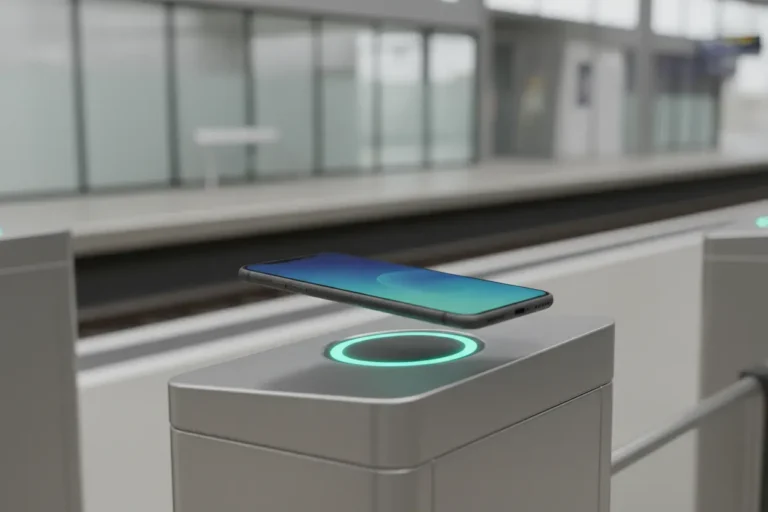
Transit riders expect payment systems that work as seamlessly as buying coffee or ordering rideshare services. This article examines how transit agencies are modernizing fare collection by embedding payment options into everyday consumer tools and adopting open-loop EMV technology with fare capping, drawing on insights from industry experts. These technological shifts are transforming the passenger experience while reducing operational complexity for transit operators.
- Adopt Open-Loop EMV And Caps
- Embed Pay Inside Familiar Consumer Tools
- Speed Entry Via QR Codes
- Board By Simple SMS Tickets
- Verify Discounts Online For Faster Access
- Get Answers With Smart Transit Chatbots
- Top Up Accounts At Local Stores
Adopt Open-Loop EMV And Caps
The single highest-leverage move I’ve watched transit agencies make on fare payment is moving to open-loop EMV contactless, where the rider just taps a regular credit card, debit card, or phone wallet at the gate and the system handles fare capping and transfers in the background. It eliminates the entire ‘buy a ticket first’ mental step that creates friction for tourists, occasional riders, and unbanked-but-prepaid users alike. The moment you let people use the payment instrument they already carry, ridership conversion improves measurably.
The canonical successful example is Transport for London’s contactless rollout, which now processes the majority of pay-as-you-go journeys via open-loop EMV. The architecturally smart piece wasn’t the tap itself, it was the daily and weekly fare-cap logic running server-side: a rider taps as many times as they need across modes (Tube, bus, rail), and the back end aggregates the day’s taps and charges no more than the equivalent day pass would have cost. That removes the cognitive burden of figuring out which ticket to buy, which is the actual barrier for casual riders. New York’s OMNY, Boston’s MBTA Charlie, and several mid-size US systems have copied the pattern with similar results.
For agencies that can’t yet support full open-loop, the pragmatic intermediate step is account-based ticketing in a single mobile app, where the QR or barcode is just a presentation layer over a server-side wallet. The Token Transit and Masabi platforms have helped dozens of mid-size US agencies (Kansas City, Salt Lake, Pittsburgh, RTC Southern Nevada) launch this in months rather than years. The trick is treating fare media as software-defined: the server knows what the rider has paid for, the device just proves identity.
The non-obvious enabler is policy, not tech. Fare capping, free transfers, and unified regional acceptance require the agency board to actually decide that simplicity beats fare-product complexity. Most failed mobile rollouts I’ve seen weren’t technical failures; they were instances where the agency replicated 14 fare products inside the app instead of consolidating to 3. Simplification is the product.

Embed Pay Inside Familiar Consumer Tools
Transit agencies should embed fares inside tools riders already trust. Bank cards, mobile wallets, and QR backups reduce friction instantly. One account across buses, rail, parking, and bikes prevents app fatigue. Real time capping then rewards frequent trips without punishing occasional riders. I would also pair multilingual onboarding with offline validation for dead zones.
A strong example is Masabi’s mobile ticketing platform used by Boston’s MBTA. Its mTicket app shortened boarding times and lowered vending maintenance costs. Success came from simple activation, visual inspection, and secure backend integrations. The lesson is convenience wins fastest when agencies remove decisions, not add features.

Speed Entry Via QR Codes
Agencies now issue QR code tickets that can be scanned at gates or bus validators, which cuts wait times at vending machines. Riders can buy a ticket online or at a kiosk and get a code that works right away. The code can live on paper or on a screen, so it fits many needs.
Scanners read the code in a second, which speeds boarding. Short time windows and changing codes help prevent misuse. Try the QR ticket option on your next trip to skip the line.
Board By Simple SMS Tickets
Text message tickets let people board without cash or a smartphone app. A rider sends a short code to a number and gets a return text that serves as the ticket. Inspectors or drivers can check the text and time stamp to confirm it is valid.
Charges can be billed through a phone plan or a linked prepaid balance. This method works even when data service is weak. Send a quick text to the agency’s number to see how SMS tickets work today.
Verify Discounts Online For Faster Access
Online systems now verify discounts for students, seniors, and low income riders with fast checks. Riders submit a form once, and the system confirms status with schools or benefit programs. After approval, the discount is added to the fare account and works right away.
Secure tools and consent prompts protect personal data during checks and renewals. Fewer trips to offices and fewer paper forms mean people get help faster. Visit the discount page and apply online to activate a reduced fare today.
Get Answers With Smart Transit Chatbots
Chatbots now guide riders through buying fares and checking balances at any hour. A simple message like buy a day pass can start a secure payment flow and deliver a ready ticket. The bot can also answer common questions and help fix basic issues without a wait.
Support is offered in several languages to reach more people. This eases pressure on phone lines and sales windows. Open a chat with the agency bot and try a quick balance check today.
Top Up Accounts At Local Stores
Barcode reloads let riders add money to a transit account at nearby stores. A cashier scans a barcode tied to the account, and the rider pays with cash or a card. Funds show up in the account fast, so the value is ready for the next ride.
This gives people who use cash the same ease as people who reload online. It also expands access to neighborhoods without ticket machines. Look for the reload barcode sign at local shops and top up during your next errand.


