BYD’s Vice President Stella Li says geopolitical tensions are the biggest obstacle to the Chinese automaker’s ambition to become the world’s top automaker by 2030. The company is expanding overseas as its domestic market slows, but new trade barriers are complicating that effort, as policy also shapes electric vehicle demand in the United States.
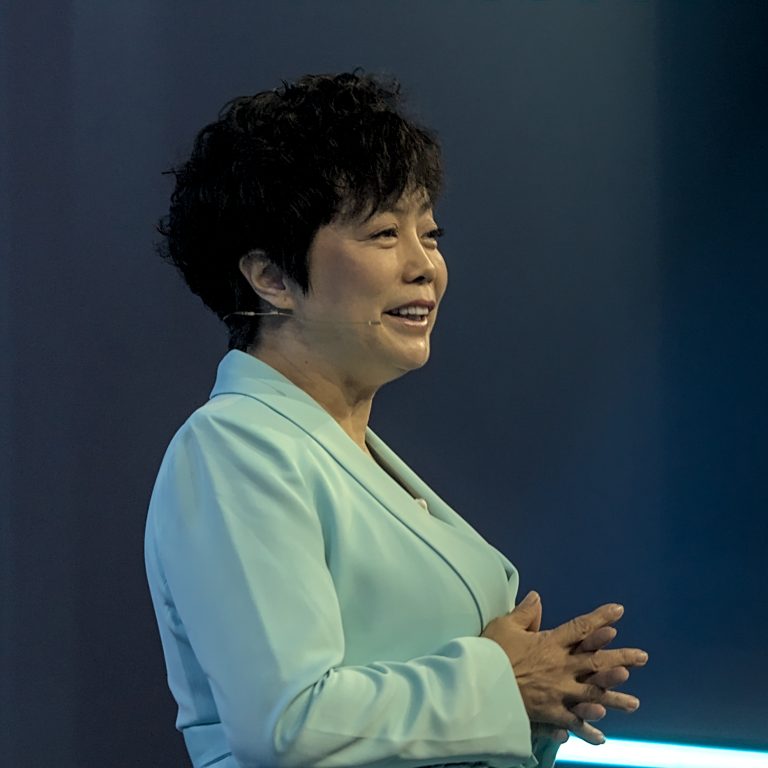
Li, BYD’s vice-president and chief executive for the Americas, Europe, the Middle East and Africa, told TIME that tariffs and other restrictions create uncertainty for the company. BYD is already the world’s leading electric-vehicle seller, and its overseas revenue has surpassed its domestic revenue.
BYD’s Vice President Faces a Geopolitical Challenge
In the interview, Li described daily headlines about possible tariffs as “scary news.” She pointed to reports of a 45% U.K. tariff and another possible European Union tariff as examples of the pressure facing the company.
BYD’s growth has helped prompt governments to reconsider trade rules. The source reports tariffs of 27% in the E.U., 35% in Brazil, 40% in Turkey and 100% in the U.S. On Oct. 12, the E.U. announced a 350,000-a-year quota on hybrid electric-vehicle imports from China, a move expected to halve their market share.
The U.S. has taken a separate step. In June, the Pentagon labeled BYD a “Chinese military company.” Li said BYD is working to understand the reason for the designation and is pursuing a legal basis to remove it. She argued that the explanations cited, including the company’s proximity to China’s industry authority and a manufacturing plant in an army industrial park, also apply to other companies.
Li said the designation would not affect BYD’s existing American business, including batteries and buses. Transit Tomorrow has also examined Europe’s adoption of electric buses. Her remarks describe the company’s position; the interview does not report a resolution of the designation.
Local Hiring and Overseas Growth
European policymakers have discussed restricting BYD to protect established automakers. Li said those concerns are mainly political, and argued that companies manufacturing in the region would hire local workers. She said BYD needs to strengthen its business by hiring locally.
Asked whether overseas joint ventures should mirror the partnerships foreign automakers formed in China, Li said the circumstances have changed. She said foreign companies made substantial profits in China over the past 20 years, while BYD could not expect to earn the same profit under a joint venture abroad.
Li also said Chinese engineers gained experience through earlier partnerships, while describing BYD’s own role in developing the domestic industry. She characterized China’s market as more open, competitive and driven by consumers than it was when foreign automakers entered.
BYD Still Plans to Defend Its China Position
Despite the overseas push, Li said BYD must keep focusing on China and retain its number one position there. She compared the domestic market’s difficult conditions to altitude training, saying the company needs to become stronger at home.
That strategy comes as China’s auto market cools amid a broader consumer slowdown and growing competition. The company’s overseas business has already exceeded its domestic revenue, making international growth important even as Li says the home market remains a priority.
Li also addressed concerns about data transfers from BYD vehicles. She said the company is especially careful and already uses technology firms from outside China. She specifically said its data center and cloud use Google.
Technology Ambitions Have Longer Timelines
Beyond trade, the interview covered BYD’s plans for batteries, autonomous driving and robotics. Li said solid-state battery technology still needs to mature before mass production. That remains one area within the broader advances in electric vehicle technology. While the industry is aiming for 2030, she said the schedule may need to be postponed.
Li said BYD intends to be the first company to make solid-state batteries work, but the interview provides no confirmed production date. She called autonomous driving a major challenge for cars and listed charging, robots, battery storage, servers and server components among areas BYD is pursuing.
On vehicle chips, Li said BYD’s own semiconductors will take some share, but will not reach 100%. She said Nvidia will remain a partner and that BYD does not use Huawei chipsets because it needs to sell globally.
BYD’s goal of overtaking Toyota by 2030 would require more than doubling its output at current sales figures, according to the source. Li’s comments leave the company’s next steps clear: it plans to keep building its domestic position, hire locally in overseas markets and pursue legal relief from the U.S. designation while trade restrictions continue to shape its expansion.
TIME’s full interview with BYD’s vice-president details the company’s responses to those pressures.