Tourism destinations face mounting pressure to meet visitor expectations while managing operational challenges. This article examines twelve practical strategies that combine technology and human-centered design to improve guest experiences, drawing on insights from industry experts and real-world applications. From IoT-guided crowd management to augmented reality at landmarks, these approaches offer concrete ways to modernize tourism infrastructure.
- Guide Crowds With Visitor-Focused IoT
- Trigger Upgrades From Structured Guest Feedback
- Unify Services on a Human-Centered Platform
- Prioritize Proactive Disruption Response With Oversight
- Install Connected LED Lights for Safer Nights
- Build Around Actual Movement Patterns
- Enable Point-And-Learn AR at Landmarks
- Deploy Smart Upkeep for Pristine Public Spaces
- Connect Data to Proximity Narratives
- Provide Offline GPS Tours With Context
- Showcase Local Reels for Authentic Discovery
- Sanitize High-Touch Points With UVC Chambers
Guide Crowds With Visitor-Focused IoT
At Software House, we built a real-time visitor flow management system for a coastal tourism board that transformed how they handled peak season crowding. The core tip is to deploy IoT sensors at key entry points and attractions, then feed that data into a mobile app that visitors actually want to use. Most smart tourism projects fail because they focus on collecting data for city planners rather than providing immediate value to tourists.
Our approach was different. We installed pedestrian counting sensors at 15 popular locations and connected them to a visitor-facing app that showed real-time crowd levels using a simple green, yellow, and red system. When a beach or market was at capacity, the app automatically suggested nearby alternatives with lower crowds, estimated wait times, and walking directions.
The technology improved the visitor experience in three measurable ways. First, average visit duration increased by 22 percent because tourists spent less time in frustrating queues and more time actually enjoying attractions. Second, spending at previously overlooked locations increased by 35 percent because the app redirected foot traffic to lesser-known restaurants and shops. Third, visitor satisfaction scores on post-trip surveys jumped from 7.1 to 8.6 out of 10 during peak season.
The key technical decision was using edge computing at each sensor location rather than sending all data to the cloud. This kept the crowd data updating every 30 seconds instead of every few minutes, which made the real-time guidance feel genuinely useful rather than outdated. Visitors trusted the app because the information was always current.

Trigger Upgrades From Structured Guest Feedback
Running 15 furnished rentals across Detroit and Chicago, I’ve learned that the smartest infrastructure investment isn’t always the flashiest—it’s the one that directly removes friction for your guest.
The single tip I’d give: use guest feedback loops to trigger specific, measurable infrastructure upgrades. When our guests repeatedly flagged confusion about navigating our properties, we didn’t just add a FAQ—we built out property walkthrough videos for every unit. That one targeted change drove a 15% jump in booking conversions and measurably improved satisfaction scores.
The broader lesson for destinations: treat visitor pain points like operational data. Detroit’s best tourism assets—the Riverwalk, Eastern Market, Belle Isle—already exist. The technology win is building feedback infrastructure that tells you where the experience breaks down, then fixing exactly that, not everything at once.
Small, precise improvements tied to real visitor behavior will outperform broad “smart city” overhauls every time. You don’t need a massive tech budget—you need a system that captures complaints early and responds fast.

Unify Services on a Human-Centered Platform
One practical tip is to centralize guest services on a single, easy-to-use digital platform that integrates property controls, concierge services, and local information. At NCG EXPERIENCE, we prioritize connecting in-room systems and service delivery so guests feel cared for rather than managed by technology. Begin with simple integrations such as mobile check-in, localized wayfinding, and real-time updates for amenities and transport. Keep the interface intuitive and let staff handle the personal touches to ensure technology enhances, not replaces, the human experience.

Prioritize Proactive Disruption Response With Oversight
Running a travel management company means I live inside the infrastructure that moves people around the world daily—I see what actually improves a visitor’s experience versus what just sounds good in a pitch deck.
My single biggest tip: prioritize real-time disruption response systems over flashy visitor-facing tech. A destination becomes genuinely attractive when travelers feel held by the infrastructure—meaning when a flight cancels or a venue closes unexpectedly, the system proactively reroutes them rather than leaving them stranded. We’ve built exactly this into our managed travel model, and the difference in traveler satisfaction is night and day.
The concrete example I keep coming back to: corporate travelers in our network who hit weather disruptions get rebooked before they land, because our systems monitor conditions continuously. Destinations that wire this same logic into their tourism infrastructure—dynamic transport rerouting, live capacity alerts at attractions—stop hemorrhaging frustrated visitors who leave with bad stories.
The technology isn’t the hard part. The hard part is building human oversight into the tech layer. Tools like Google or Amazon can find you a hotel, but when something breaks down, you need a responsive system behind it. Smart destinations invest in that response backbone first, then layer the visitor-facing features on top.

Install Connected LED Lights for Safer Nights
Utilize smart LED street lighting that is equipped with motion detectors as well as remote monitoring to enhance nighttime safety and guest comfort. As an extended visitor of Stingray Villa in Cozumel, I utilized this technology to illuminate all areas of the property and allow maintenance personnel to correct outages prior to guest awareness; thus creating a safer and calmer atmosphere for both visitors and residents. Prioritize maintaining reliable real-time monitoring and serviceable components over flashy or aesthetic characteristics to create a consistent guest experience.

Build Around Actual Movement Patterns
My background is in retail site selection – helping brands like Cavender’s and TNT Fireworks figure out exactly where to open locations using foot traffic data, demographics, and movement patterns. That data translates directly to tourism infrastructure decisions.
The most underused tip: use real movement data to identify where visitors actually go versus where you *think* they go. Tourism boards often invest in infrastructure at planned attractions, but foot traffic data frequently shows visitors clustering in unexpected spots – side streets, transit hubs, informal gathering areas. Build your smart infrastructure (wayfinding, connectivity, amenities) where people already are, not where you hoped they’d be.
With TNT Fireworks, we discovered that analyzing actual visitor flow patterns – not assumptions – let them place 150+ locations in under 6 months that all hit their targets. The same logic applies to tourism: a destination that instruments real pedestrian data and responds to it will always outperform one running on outdated surveys and gut instinct.
The concrete move: partner with a foot traffic data provider to map 90-day visitor flow before committing infrastructure spend. It costs a fraction of a misplaced investment and tells you exactly which corridors need better signage, Wi-Fi, or transit access – because the data shows where friction actually exists for real visitors.

Enable Point-And-Learn AR at Landmarks
One practical tip is to pair smart wayfinding with visual search and augmented reality so visitors can simply point their phone at a landmark and get clear, on the spot context. We have explored how visual search combined with AR can turn a quick scan into an interactive experience, not just a static information page. In a tourism setting, that can mean an AI guided AR overlay that shows what a historic building looked like decades ago, along with the key facts visitors care about in that moment. The value comes from making the experience context aware, so the content adapts to what the visitor is viewing and what they are likely trying to do next.

Deploy Smart Upkeep for Pristine Public Spaces
Invest in real-time cleanliness and maintenance monitoring for public spaces. Operating in Marin County — one of the most visited areas in Northern California thanks to Muir Woods, Sausalito, and the Golden Gate — I’ve seen how quickly a destination’s reputation can suffer when public restrooms, transit stops, and walkways aren’t maintained. Smart sensors that track foot traffic, waste bin capacity, and restroom supply levels allow service teams to respond proactively rather than on fixed schedules. Visitors notice when a place is well-kept, and that impression directly influences whether they recommend it, leave positive reviews, or return. Technology doesn’t need to be flashy for tourists — sometimes the most impactful smart infrastructure is the kind they never see because everything just works.

Connect Data to Proximity Narratives
As CEO of The Idea Farm, a firm trusted by businesses for over 50 years, I approach infrastructure as a growth system where technology must create demand and support the “sale” of the destination. The most effective tip is to implement a unified data layer that connects visitor behavior to real-time messaging, treating the entire city as a cohesive marketing funnel.
I recommend using proximity-based audio storytelling via platforms like Guidigo to bridge the gap between physical sites and digital engagement. My background in audio engineering shows that immersive, high-quality audio captures attention far more effectively than static displays, turning a standard walk into a high-value narrative experience.
We use tools like HubSpot to build connected systems for our clients that replace guesswork with measurable outcomes. Destinations can apply this by tracking visitor dwell times via smart sensors and triggering personalized incentives to their mobile devices, which can increase local merchant revenue by over 15%.
Smart infrastructure should be a commercial function that manages capacity while enhancing the visitor’s experience. When your system provides real-time updates on crowd density or traffic, it earns visitor trust and ensures growth remains scalable without relying on hype.

Provide Offline GPS Tours With Context
Use GPS-based touring apps that deliver concise, location-triggered content (and work offline) so visitors can learn as they move through a city. That approach lets people keep their eyes on the streets and buildings instead of flipping between a map and a guidebook, and it transforms anonymous buildings and statues into culturally and historically rich experiences. On a recent walk before the Cathedral of Reims, my phone told me it was built on Gallo Roman baths and that it hosted royal coronations, all without needing data. Providing reliable offline maps and short, place-based narratives reduces friction and deepens engagement in self-guided exploration. And setting up this technology costs a fraction of 1% of the cost of building bricks-and-mortar tourist infrastructure.

Showcase Local Reels for Authentic Discovery
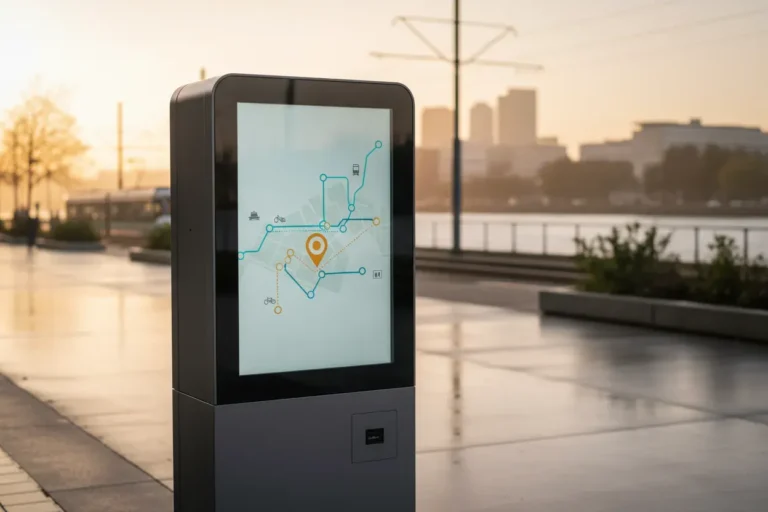
One practical tip is to surface local social media content through smart infrastructure so visitors see authentic, timely recommendations. I frequently use TikTok and Instagram reels to discover destinations and find affordable or hidden local spots, which shows how powerful short-form local content can be. Our city’s Instagram page often highlights events and attractions I would not have known about otherwise, and that kind of feed makes discovery simple. Prioritizing real-time local posts in displays and apps helps travelers find relevant experiences quickly.

Sanitize High-Touch Points With UVC Chambers
As founder of MicroLumix and GermPass, creators of automated UVC disinfection for cruise lines and high-traffic public spaces, my tip is to install self-sealing UVC chambers on high-volume touchpoints like elevators, door handles, and restrooms.
GermPass sanitizes after every touch in 5-7 seconds, achieving 99.999% efficacy with 5.31 log-reduction average in University of Arizona lab tests against MRSA, norovirus, and SARS-CoV-2.
This boosts tourism by building visitor trust in safe destinations–CDC notes 80% of infections spread by hands–leading to higher satisfaction and repeat trips, as seen in our cruise line pilots.