Fairfield, Connecticut has begun operating automated speed cameras in school zones around the clock, an enforcement shift that town officials say is necessary to prevent fatal crashes but that residents question on grounds of scope, revenue impact, and privacy. The program marks a wider shift among U.S. municipalities toward automated detection systems as part of Vision Zero initiatives, though the rollout reveals friction between safety goals and public trust in how those technologies operate.
First Selectperson Christine Vitale cited two fatal crashes on Redding Road when introducing the speed camera program to residents at a public meeting in late July. She framed the effort as one of three pillars for road safety: education, engineering, and enforcement. Public Works Director Frank Petise added that Vision Zero aims to eliminate traffic fatalities and serious injuries by 2034, and that speed is the critical variable in collision severity. Early data supported the enforcement angle: in the first two months of operation, speeding violations at camera locations fell 87.2 percent from the initial warning period through June, according to camera vendor Altumint.
How Detection Systems Process Violations
The Fairfield system records only vehicles exceeding the posted speed limit by at least 11 miles per hour, a threshold meant to reduce false positives and focus enforcement on genuinely dangerous behavior. Altumint representatives told the town that citations undergo two-stage review: vendor staff first screen recordings, then town personnel make the final determination before issuing a citation. The process attempts to build accuracy into automation, though residents questioned whether the threshold design serves safety or revenue generation.
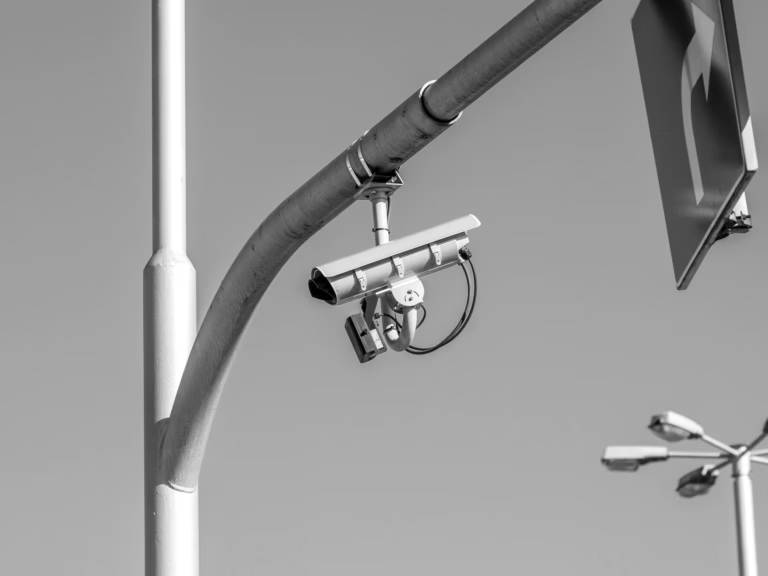
Data security emerged as a secondary concern. Altumint outlined its protocols for handling personally identifiable information and noted that state law requires deletion of such data after cases are resolved. Despite these assurances, several speakers at the public meeting pressed for privacy clarity and objected to cameras operating 24 hours a day rather than only during school hours and pickup times. The tension reflects a broader skepticism about surveillance scope that has surfaced as cities deploy real-time violation detection systems to replace manual traffic enforcement.
Resident Concerns and Communication Gaps
The public meeting revealed a divide between town officials and residents over how the program was introduced and executed. Several speakers called for additional warning Infrastructure, such as flashing lights and digital speed feedback signs, before or alongside camera deployment. Others questioned the timing and sequencing of the rollout, noting that the community had not been fully consulted before cameras began issuing warnings.
Vitale indicated that feedback had already prompted operational changes, including trimming trees that obscured warning signs and moving forward with pavement markings to alert drivers to school zones. These adjustments suggest that some resident pressure is being translated into physical infrastructure improvements. However, the demand to limit camera operation to school hours and pickup times remains unresolved, as does the question of whether revenue projections factored into the enforcement scope.
Balancing Detection Technology with Trust
The Fairfield case sits at an inflection point in how U.S. municipalities approach automated enforcement. Speed cameras, license plate readers, and other detection systems offer consistency and 24/7 monitoring that human enforcement cannot match. Yet their deployment also raises questions about mission creep, cost recovery, and public consent that simple safety arguments do not settle.
Massachusetts has faced similar dynamics. Following a string of wrong-way crashes on Interstate 290, including a deadly collision last month, state authorities announced plans to expand wrong-way detection systems and install warning beacons at highway ramps. The added investment in detection reflects safety logic, yet the context of repeated near-misses and fatalities also illustrates how technology deployment accelerates when incidents spike. Detection systems work best when paired with transparent communication about why they exist, how they operate, and what guardrails constrain them.
Fairfield has made some moves in that direction by holding a public meeting and adjusting operations based on feedback. The town has also committed to pavement markings and clearer signage, which address the root problem of driver awareness rather than relying solely on enforcement. Whether these combined measures-detection, infrastructure, and education-will satisfy resident concerns or change behavior more effectively than enforcement alone remains to be tested as the program matures.
The outcome in Fairfield will likely inform other communities considering similar automated safety tools. Successful deployment may depend less on camera technology itself and more on whether officials can explain enforcement scope clearly, involve residents before rollout, and show that data is being used to improve roads, not just collect fines.